Understanding Metal Building Roof Styles: Regular vs A-Frame vs Vertical

Metal Buildings Buying Guide
The roof is arguably the most critical component of any metal building, serving as your primary defense against rain, snow, wind, and debris. Selecting the right roof style not only enhances the aesthetic appeal of your structure but also impacts its long-term durability, maintenance needs, and overall performance. At Garage Buildings, we offer three distinct roof styles, each tailored to meet various needs and preferences.
Regular Roof (Economy Style)
The regular roof, often referred to as the "standard" or "economy" roof, features rounded edges where the roof meets the walls. The sheet metal panels are installed horizontally across the roof surface. This is the most budget-friendly roof style, making it ideal for regions with mild weather and minimal precipitation.
Best for: Budget-conscious buyers in temperate climates, temporary structures, and open carports where maximum weather protection is not a priority.
Considerations: Due to the horizontal panel design, water and debris can accumulate in the seams between panels. In areas experiencing heavy rainfall or snowfall, this can lead to accelerated wear and potential leaks over time.
Boxed Eave Roof (A-Frame Style)
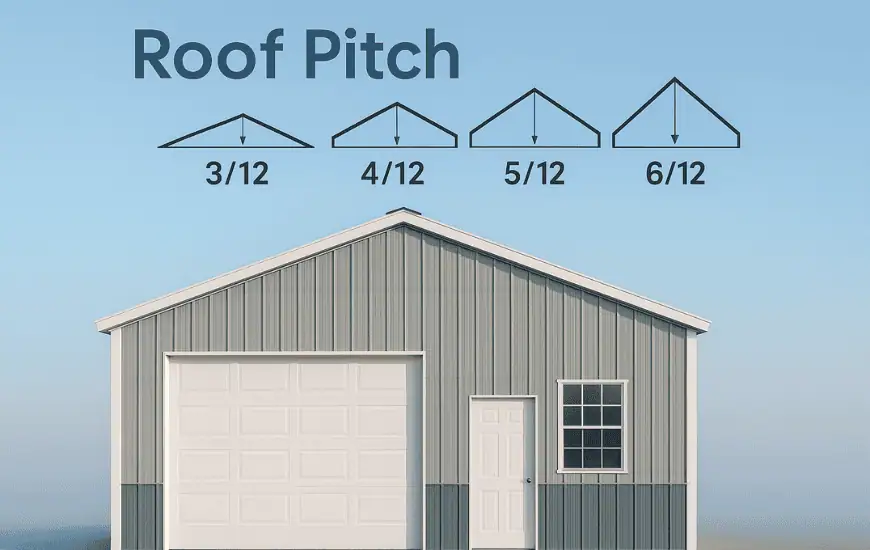
The boxed eave roof, also known as an A-frame roof, provides your building with a classic peaked roofline reminiscent of traditional homes and barns. Similar to the regular roof, it utilizes horizontal panels; however, the squared-off eaves deliver a more polished, residential look.
Best for: Homeowners seeking a traditional appearance that complements their house or neighborhood aesthetic. This style is popular for garages, workshops, and residential buildings where visual appeal is key.
Considerations: Like the regular roof, the horizontal panels share the same drainage characteristics. If you reside in an area prone to heavy rain, snow, or frequent storms, the vertical roof may provide superior long-term performance.
Vertical Roof (Premium Style)
The vertical roof is our premium offering and is the preferred choice for most buildings. The key distinction is that the sheet metal panels run vertically—from the ridge cap down to the eaves. This design allows rain, snow, leaves, and other debris to slide off the roof naturally, avoiding pooling in horizontal seams.
Best for: Any structure where maximum durability and weather protection are paramount. This style is highly recommended for regions with heavy rain, snow, ice, or high winds and is required for buildings wider than 30 feet.
Considerations: While the vertical roof typically comes at a higher initial investment, most customers find this choice worthwhile. Its superior drainage extends the lifespan of your roof panels, minimizes maintenance, and enhances the protection of everything inside.
Which Roof Style Should You Choose?
Consider this straightforward decision framework:
Working with a tight budget + mild climate? The regular roof is a cost-effective option.
Desiring a traditional, home-like appearance? The boxed eave roof delivers that aesthetic.
Seeking the best long-term value and performance? The vertical roof stands out as the top choice.
Living in an area with heavy rain, snow, or wind? The vertical roof is the recommended option.
Constructing a building wider than 30 feet? The vertical roof is necessary.
Our Recommendation
For most customers, we advocate for the vertical roof. Although it may require a slightly higher upfront investment, its exceptional drainage, longer lifespan, reduced maintenance needs, and superior weather performance make it the best overall value. Over the lifespan of your building, the vertical roof often pays for itself multiple times over.
Unsure which roof style suits your building? Call us at (866) 580-2965, and one of our building specialists will assist you in selecting the ideal option for your location, budget, and requirements. Having guided customers in this decision since 1997, we’re eager to share our expertise.
Summarize this blog post with:
About the author
Stephan Michaels
Stephan Michaels is the founder and owner of GarageBuildings.com, a company he started more than 25 years ago—quite literally from his own garage. What began as a small operation has grown into one of the largest tubular steel building dealerships in the United States. GarageBuildings.com remains proudly family-owned and operated, with family at the heart of its success. Stephan’s mother has served as office manager for over two decades, his sister Charlotte oversees daily sales and operations, his niece Kayla leads the accounting department, and his daughter Ellie is part of the sales team. Together, they have built a business rooted in trust, dedication, and long-standing relationships. Stephan and his team are committed to providing a transparent, positive experience for every customer and partner. Their continued growth and strong reputation are driven largely by customer referrals and the confidence people place in their work every day.